
Private Label Clothing Manufacturers:7 Proven Benefits for Your Brand
Private label clothing manufacturers are the quiet force behind almost every fashion brand you scroll past on Instagram or add to cart on Amazon. That trendy hoodie, those buttery soft leggings, the streetwear tee everyone’s suddenly wearing chances are none of it was made in-house. It came from a manufacturing partner working behind the scenes, turning someone’s idea into a real, sellable product.
If you’ve ever thought about starting your own clothing brand but weren’t sure where to even begin, this is probably the most important thing you’ll read before you spend a dollar on production. Let’s talk about what private label clothing manufacturers actually do, why so many brands from tiny startups to household names rely on them, and how to pick the right one for your business.
So, What Exactly Are Private Label Clothing Manufacturers?
Think of it this way: instead of designing a garment from absolute scratch, private label clothing manufacturers give you access to garments that are already made, tested, and ready to go you just add your own label, tags, and packaging. It’s the difference between building a house from raw lumber versus buying a beautifully finished one and simply changing the paint color and putting your name on the mailbox.
This model has taken off in streetwear, activewear, and fast-fashion, where getting to market quickly often matters more than having something completely one-of-a-kind. And honestly, for most new brand owners, that trade off makes a lot of sense.
Why So Many Brands Choose Private Label Clothing Manufacturers
There isn’t just one reason brands go this route it’s usually a combination of a few things that make the decision feel obvious once you see them laid out.
Speed is probably the biggest one. Because private label clothing manufacturers already have base patterns, fabrics, and production lines running, you can go from “I have an idea” to “I have boxes of product” in weeks rather than months. That kind of speed can be the difference between catching a trend at its peak and missing it entirely.
Cost matters just as much. Building a relationship with a factory for fully custom garments usually means committing to large minimum order quantities before you’ve even sold your first piece. Private label manufacturers tend to be far more forgiving here, often allowing smaller batches so you can test the waters without draining your savings account.
Then there’s quality. Manufacturers who’ve been doing this for years have already worked out the kinks fewer defects, more consistent sizing, garments that survive more than three washes. That’s a hard thing to replicate if you’re starting a production process from zero.
There’s also the scalability angle. A good manufacturing partner grows with you. Many private label clothing manufacturers offer better pricing as your order volume increases, which means your margins actually improve the bigger you get, instead of staying flat or shrinking.
And maybe most importantly, outsourcing production frees you up to actually build a brand. You don’t need to become a textile engineer to sell great clothes you need to understand your customer, your marketing, and your product curation. Let the manufacturer handle the sewing machines.
A few other perks worth mentioning: many manufacturers stay ahead of seasonal trends and offer catalogs full of styles that already feel current, so you’re not stuck waiting on an in-house design team. And because minimum orders are smaller and lead times shorter, testing a new product line carries a lot less financial risk than committing to a fully custom run.
Why Hamimwear Is a Trusted Name in Private Label Clothing
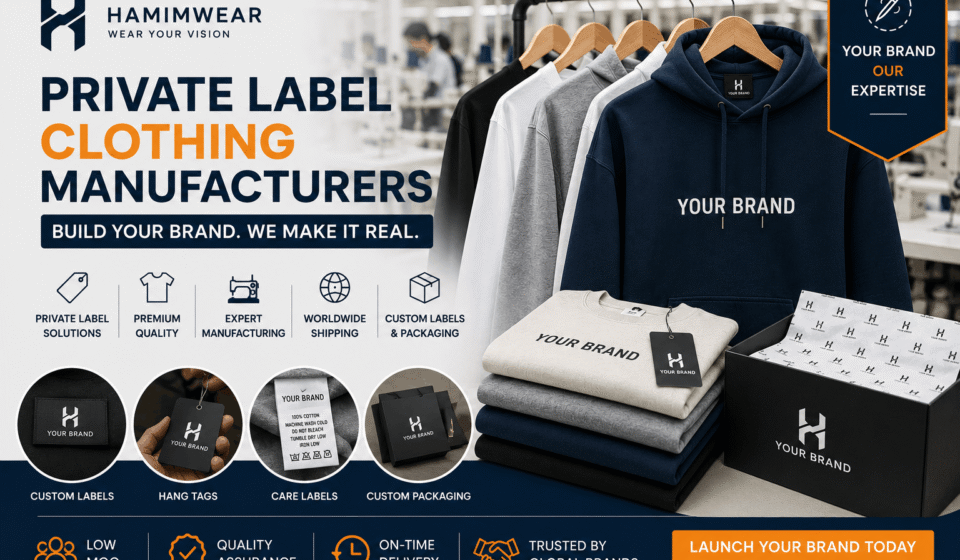
If you’re past the research phase and actually looking for a manufacturing partner, Hamimwear is one of the names worth putting at the top of your list. They work directly with entrepreneurs from first-time founders to established brands scaling up — to turn a simple idea into a finished, market-ready garment line, handling everything from fabric sourcing to final packaging.
What makes Hamimwear stand out is that they don’t force you to choose between affordability and craftsmanship. Whether you’re building a streetwear label or a fitness apparel line, it’s worth taking a look at Hamimwear’s private label catalog to see the ready-to-brand styles they offer across categories, or requesting a custom quote from Hamimwear if you already have something specific in mind.
How to Actually Choose the Right Manufacturer
Not every manufacturer is going to be the right fit for your brand, so it’s worth slowing down before you sign anything. Start with minimum order quantity — make sure it actually matches your budget and how much you realistically expect to sell in your first few months. Always ask for physical samples before committing to a bulk order; photos on a website can be deceiving, but fabric in your hands never lies.
Ask about turnaround time too, since production and shipping delays can quietly kill momentum on a launch. Compliance matters as well — reputable manufacturers should be upfront about their labor practices and factory conditions. The Fair Labor Association publishes helpful guidelines if you want a benchmark before choosing a partner.
And don’t underestimate communication. A manufacturer who responds quickly and clearly is worth more to your sanity than one offering a slightly cheaper price but radio silence for two weeks at a time.
If you’re also thinking about what comes after production marketing, launch strategy, all of it Hamimwear’s guide to building a clothing brand from scratch is a solid next read.
Private Label vs. White Label vs. Custom Manufacturing
These three terms get mixed up constantly, so here’s the short version. Private label means pre-made garments that you rebrand as your own. White label is similar, but usually refers to a more generic product sold to multiple brands with very little customization. Custom manufacturing means fully original designs, patterns, and fabrics built specifically for you more creative control, but also a bigger investment of both time and money.
For most people just getting started, private label clothing manufacturers hit the sweet spot between cost, speed, and quality.
How Manufacturers Organize Their Categories
Most manufacturers sort their offerings by category to make sourcing easier — activewear, streetwear, loungewear, outerwear, accessories, and so on. Browsing by category helps you quickly spot which styles actually fit your brand’s identity before you request a single sample. For example, you can browse activewear by category on Hamimwear to see how this works in practice — it’s a good way to get a feel for what’s available before reaching out.
Frequently Asked Questions
What’s the difference between private label and wholesale clothing? Wholesale clothing is usually sold under the manufacturer’s own brand name, while private label lets you put your own branding, tags, and packaging on the same base garments.
How much does it cost to work with private label clothing manufacturers? It varies a lot depending on fabric, garment type, and order volume, but many manufacturers offer starter packages built for small businesses and first-time brand owners.
Can I request custom colors or prints? Yes most private label clothing manufacturers allow custom dyeing, screen printing, or embroidery on top of their existing templates, so you’re not stuck with a totally generic look.
How do I find manufacturers I can actually trust? Look for verified suppliers on sourcing platforms, request samples before committing to anything, read reviews, and check for certifications related to labor and quality standards.
Is this a realistic option for a small startup? Very much so. Private label clothing manufacturers are often the most affordable way for small startups to launch something that looks and feels professional, without the overhead that comes with fully custom production.
Final Thoughts
Choosing the right private label clothing manufacturer can genuinely make or break your apparel business. Done right, it’s a faster, cheaper, and lower-risk path to a brand that looks legitimate from day one. Take your time vetting your options, always request samples, and start smaller than you think you need to your customers won’t be able to tell the difference between a private label piece and a fully custom one, but your bank account absolutely will.
If you’re ready to move forward, get started with Hamimwear and see why so many growing brands trust them as their private label clothing manufacturer of choice.